
GLeo X On View Gallery
Q) Can you walk us through your creative process for the Fulton Mural-from the earliest concept sketches to the final design decisions that made it onto the wall?
A) The creative process for this project was lengthy and involved several stages.
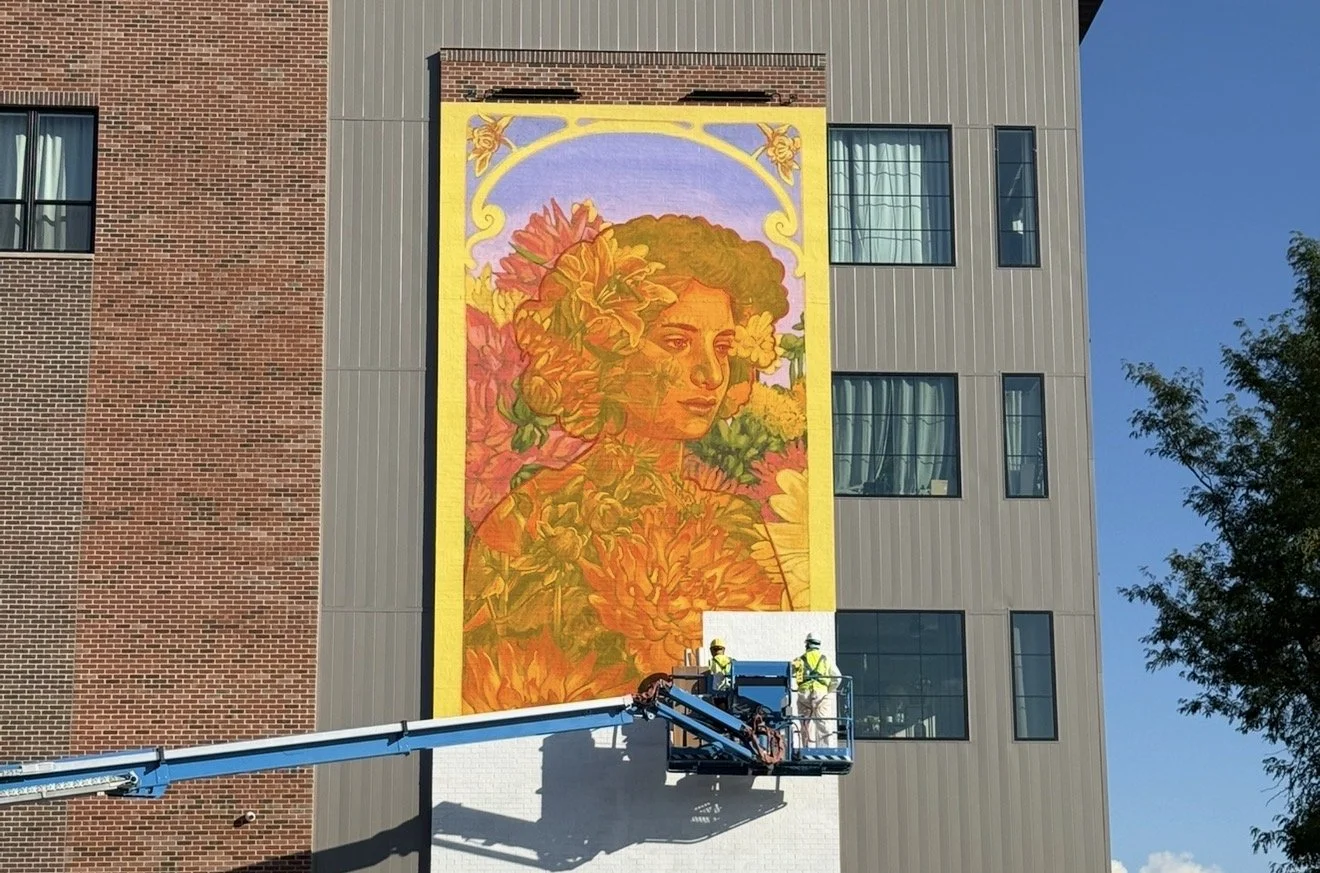
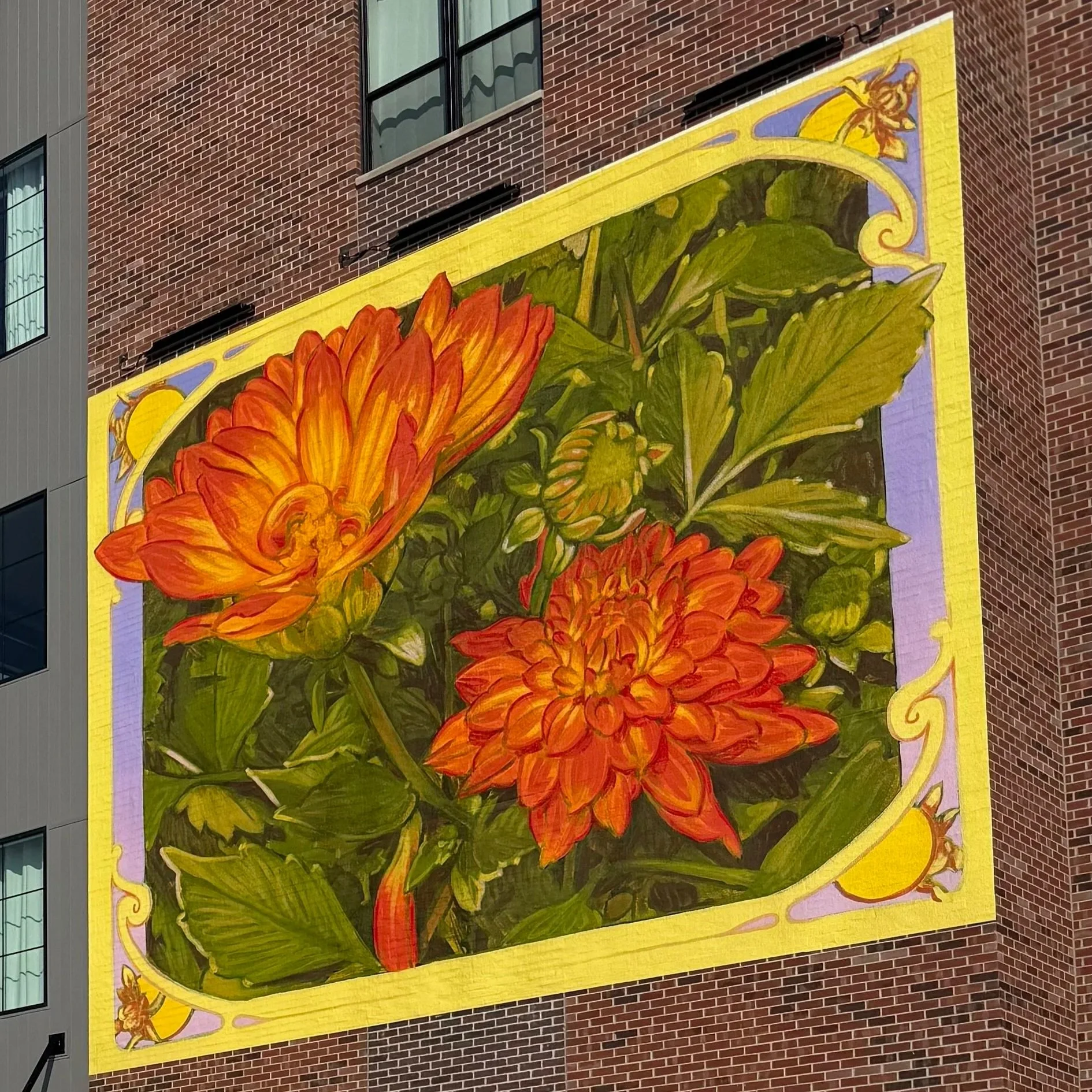
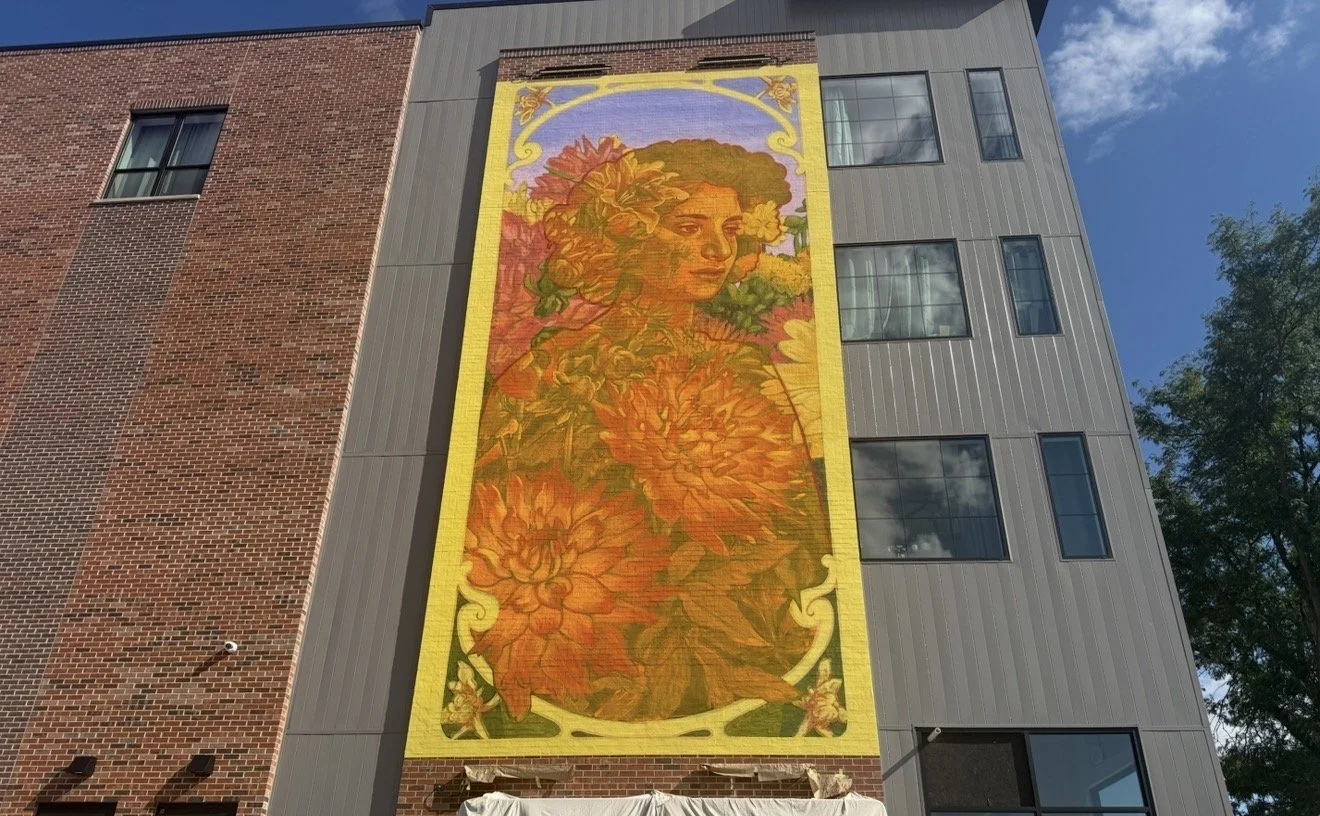
It began with the initial sketch, where the invitation was extended to create two designs that would dialogue together through the two murals on the building.
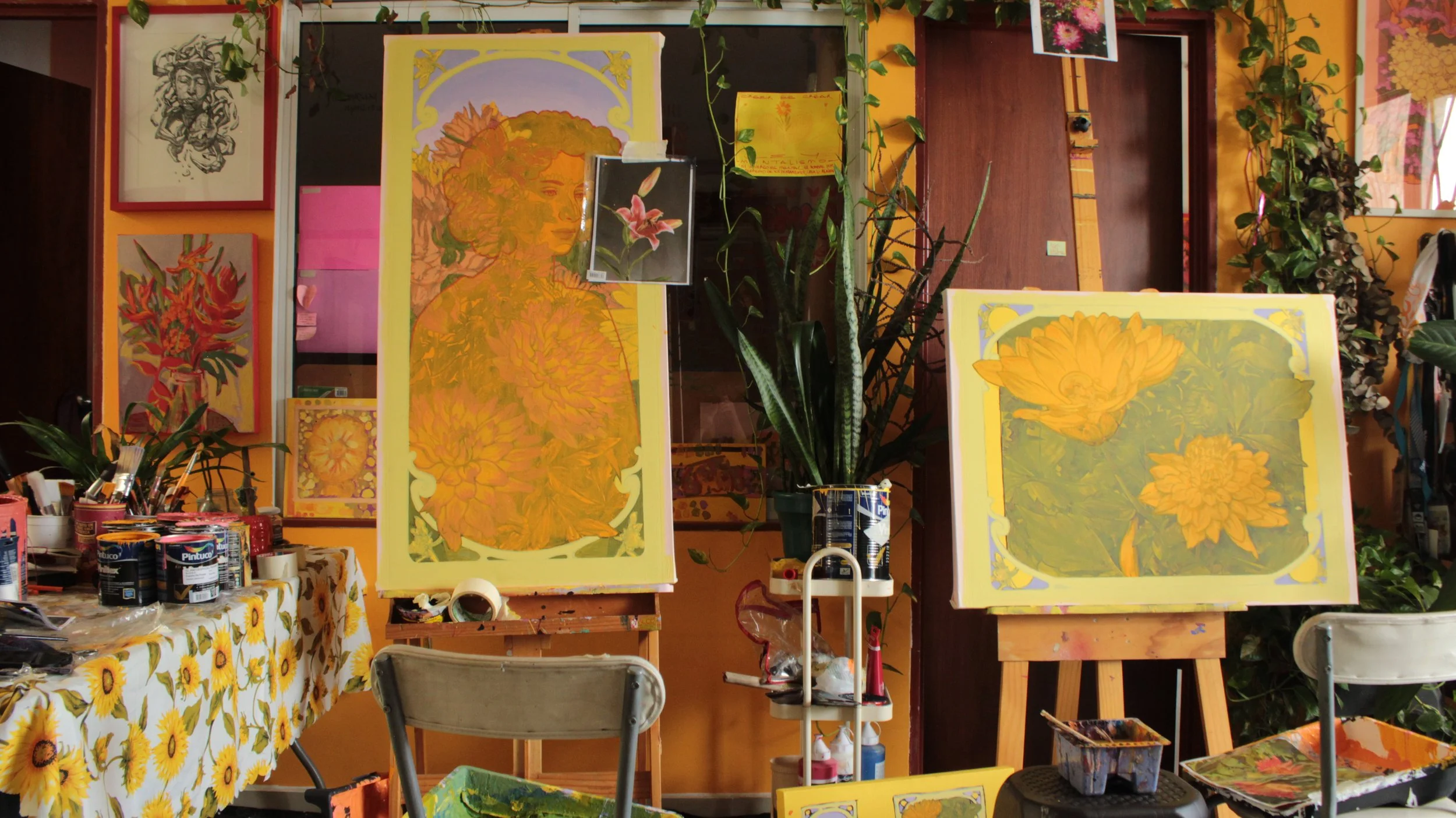
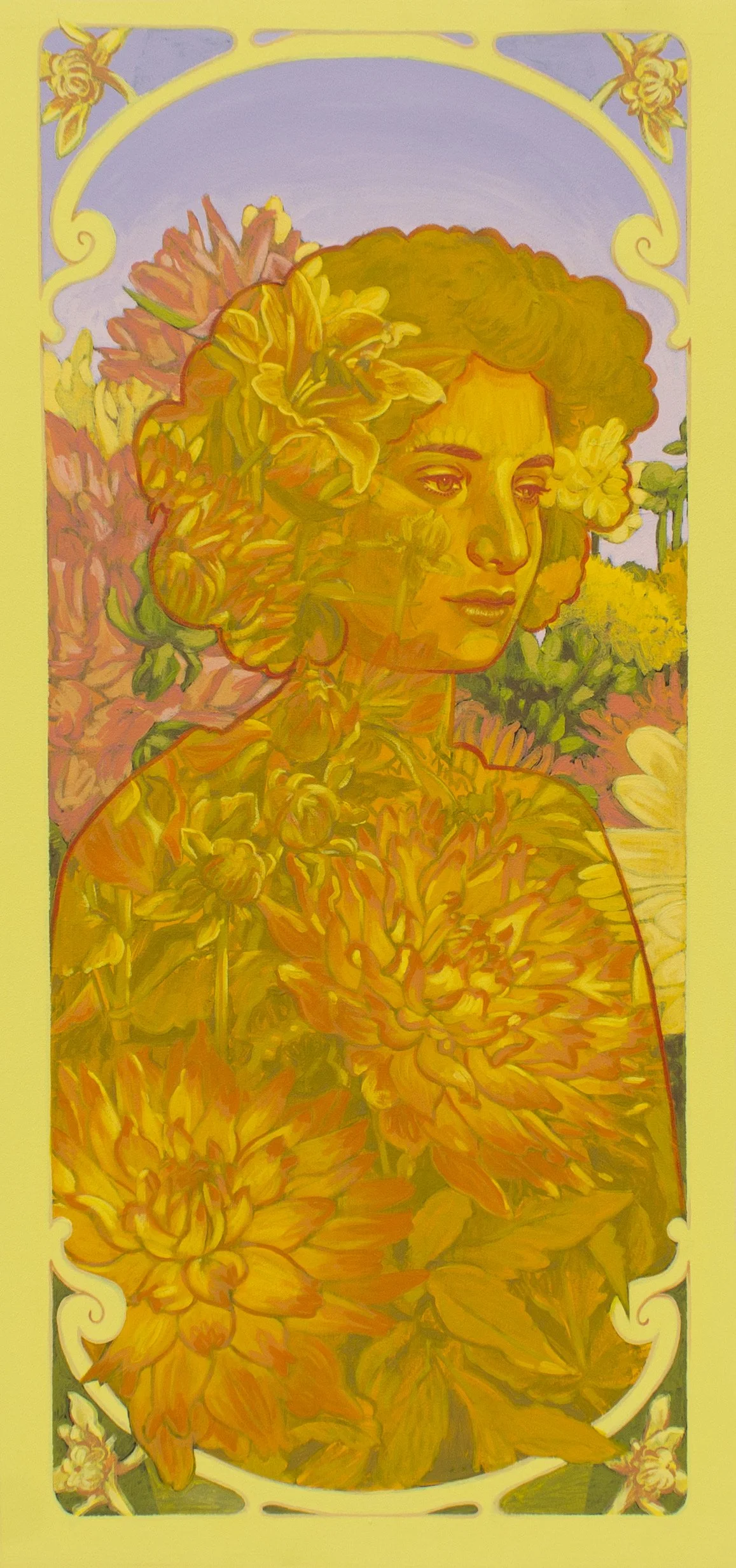
I started with drawings and the idea of representing a floral universe within a woman, which evolved into the concept of how these flowers are a symbolic representation of the natural force of vital energy.
Once the sketch was approved, we moved on to the stage of coordinating the creation of the murals. As we developed the project, several obstacles arose that seemed to make this creation unfeasible. This was a difficult situation, which presented a creative challenge: how to create the murals remotely.
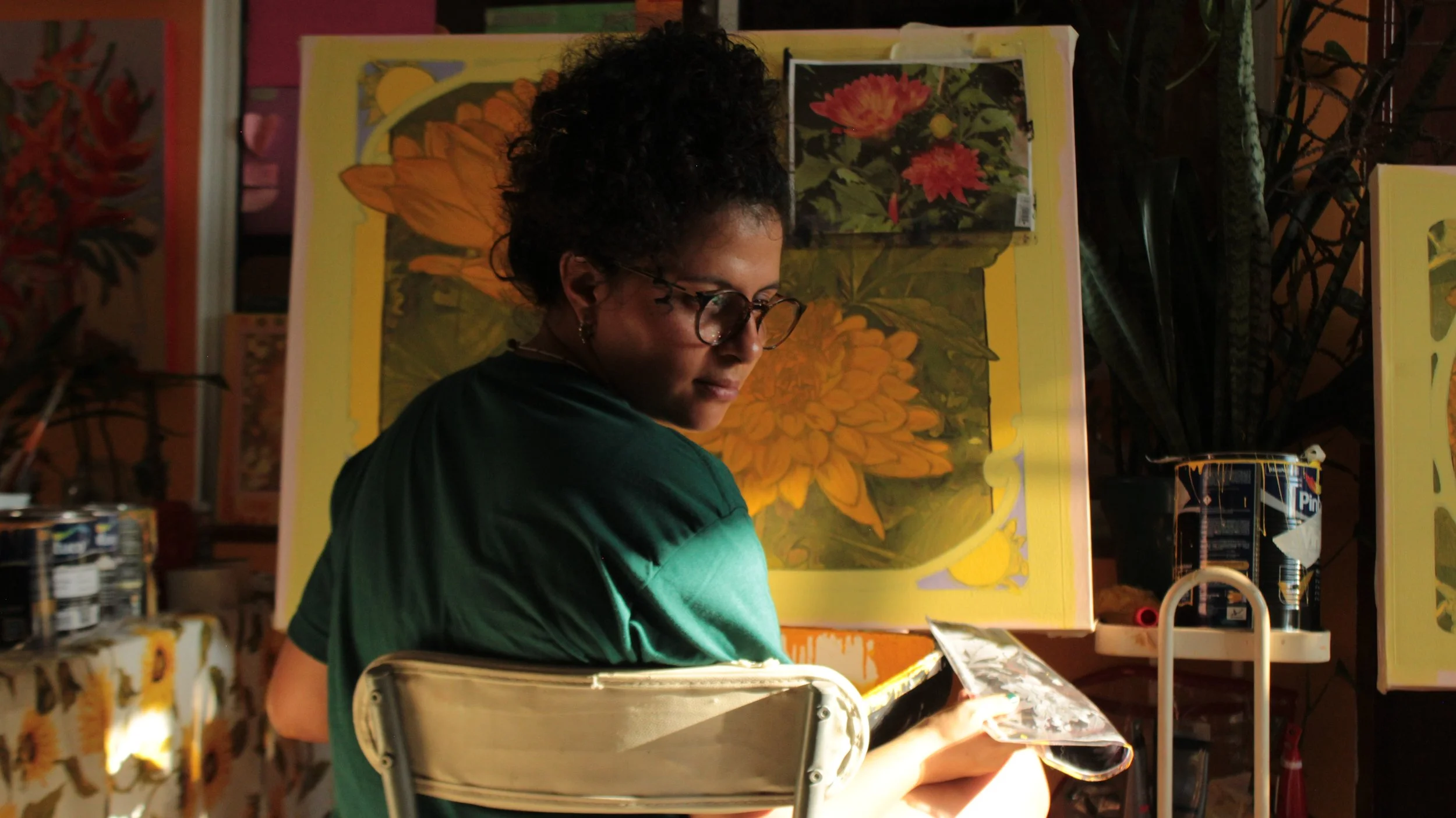
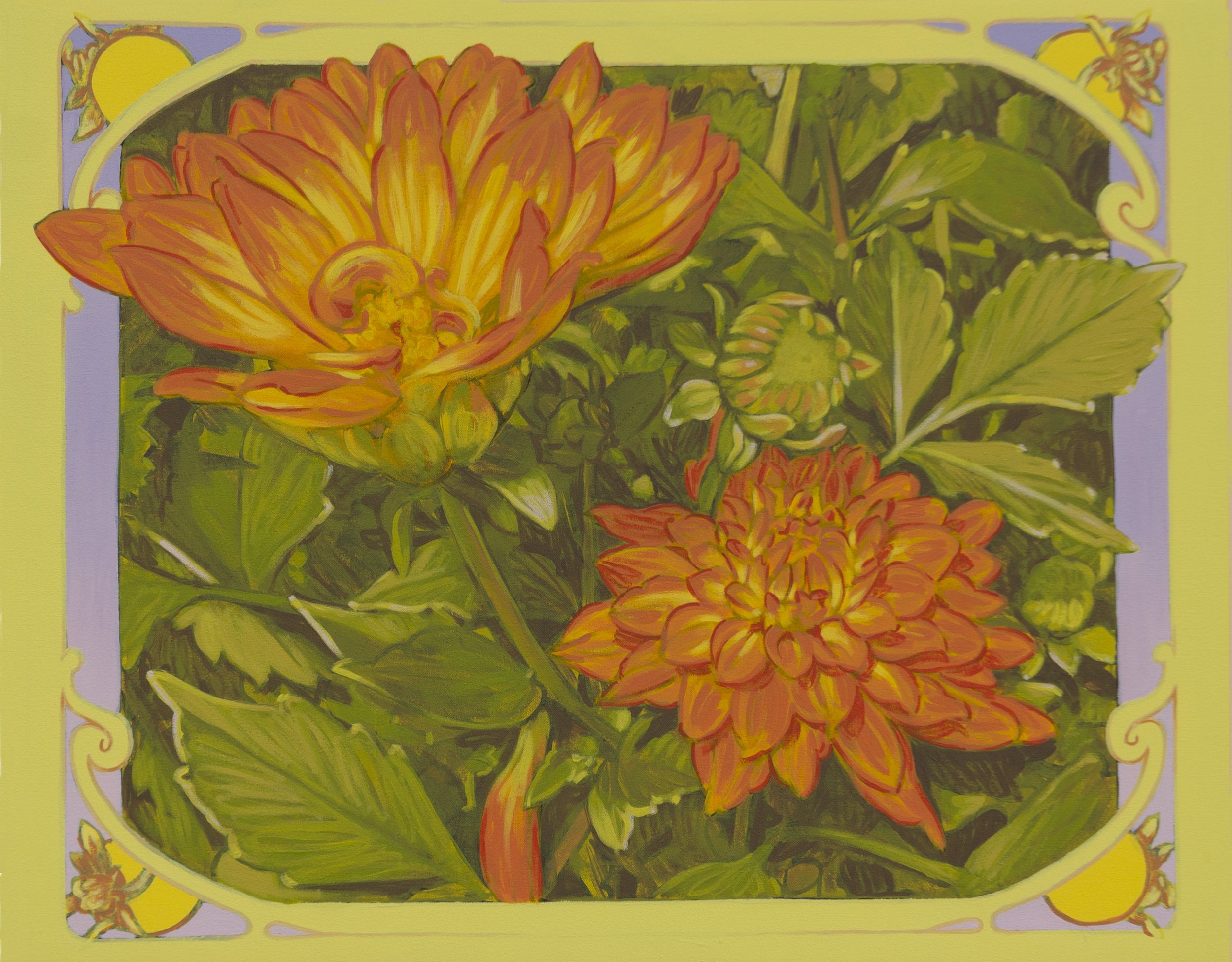
I began by painting the designs on canvases at the scale of the murals. Preliminary studies of color and size were conducted, and I was careful to make the texture more pronounced so that it would closely resemble the final result of a mural painted by me in person.
It was about unlearning an entire creative process and relearning it, being mindful of the details, colors, and shapes so they could be translated and legible on the large format.
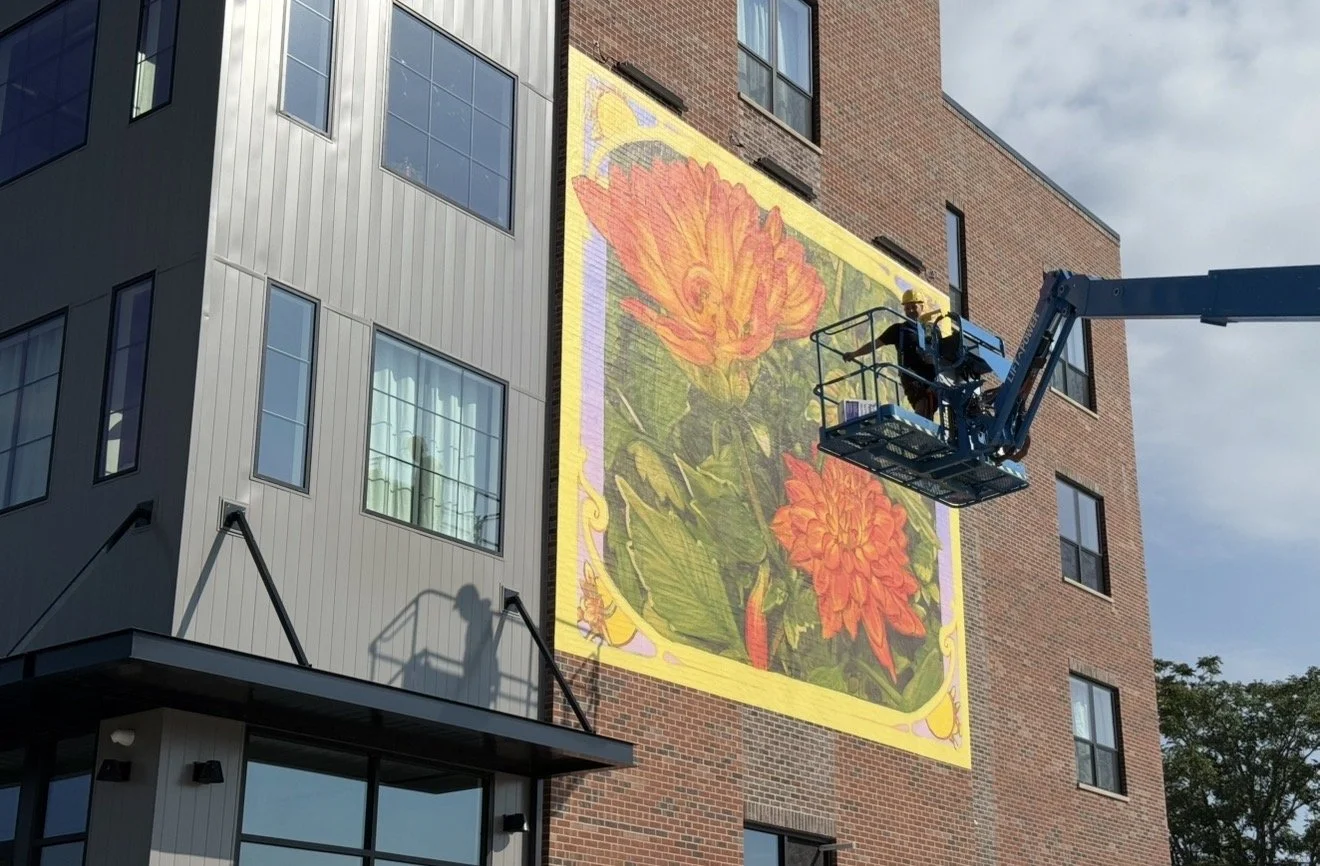
After painting them, they were scanned and printed on Polytab paper and then installed directly onto the mural thanks to the production of On View Gallery and the assistance of Mural Provisions.
Q) Your use of color carries a strong emotional and symbolic charge. How did you think about color choices for this project, and what role did they play in shaping the mood or narrative of the mural?
A) Warm colors permeate my body of work. I believe it's an attempt to share the warmth I feel for life and also a way to represent how my home, the tropics with its warm, rainy climate, its abundant vegetation, flora, and diverse fruits, feels and is perceived. A lifetime accompanied by pink sunsets bidding farewell to the sun as it sets over the Pacific.
These colorful beings remind us, in a way, that the same energy that beats within us, the same energy that brings plants to life, shows us that we are tangible expressions of life, navigating the constant changes between birth and death for the eternal creation of life.
In this specific project, it was intentional that warm colors predominate in the palette because Iowa is a territory that experiences the seasons. Amidst these climatic changes, this atmosphere accompanies its inhabitants with color, creating a feeling of spring and warmth throughout the year. (Well, that's the intention.)
Q) What specific techniques, materials, or methods were most critical to executing this mural, and were there any technical challenges that pushed you to adapt or innovate during installation?
A) The polytab technique was crucial for the execution of this mural.
To be honest, it was a very difficult experience. For a while, I considered abandoning the project because the greatest challenge was going through one of the worst experiences of my life: not being able to physically carry out what I naturally do through my work.
So, creating the mural using this polytab technique was a whole new world that motivated me through learning and novelty. I spent a considerable amount of time studying the possibilities of how I should work with the image to approximate the experience of an original, large-format mural created by me.
It became a whole new world of enjoyment that helped me rediscover painting, heal, and weave new ways of creating.
It was understanding that in creation, there are infinite possibilities for materializing an idea, for finding freedom amidst so many limitations.
Q) This project involved digital scanning and large-scale printing before installation. How did you navigate translating your original work through that process while maintaining the integrity of your hand and vision?
A) I took great care with the scaled size, and also carried out several studies of color and textures so that it could be converted to the large format in the most faithful way possible to the murals he made in person.
Q) On a personal level, what did designing the Fulton Mural mean to you emotionally, and what do you hope people feel—or carry with them—when they encounter the finished work?
A) On a personal level, this project represented one of the greatest challenges of my life, because after my detention at the border, it wasn't easy to recover from the mental and emotional trauma I experienced.
Thanks to the support of my friends and Bex, I was able to find time and redemption through the creative act. Although limitations were imposed on me, I've learned that they blur through the creative acts that unite us.
In my view, art is more than the materiality of the mural; art is the tool with which we accompany, communicate, and transform; we navigate situations and create new experiences. When difficulties arose with this project, I felt a greater desire to be part of the solution, not the problem, the fear, and the frustration.
In my opinion, it was painted with thought, painted with the words that built bridges of communication with Bex and many other people involved, painted with the emotion of the desire to transform, painted with the courage required today to find new paths that allow everyone involved to thrive.
After several months developing the project, I believe it also represents my efforts alongside Bex, her entire team, and the community to weave a network that expands through life's struggle toward the light, a silent and constant search for the expansion of our being to flourish in community.
The murals are the materialization of all those efforts to connect and communicate.
My intention with my work is to continue building bridges, where people fall in love with difference and we can find unity in art.